


Choosing an online casino is easier when the game lobby matches how you prefer to play. The useful question is not simply how many titles are listed, but whether you can quickly separate slots, table games, live dealers and faster original formats. The casino betya catalogue is described as covering several of these categories, with filters intended to narrow a large library. A practical comparison should therefore focus on game style, pace, information available before play and how comfortably each format fits your budget.
Start with the game style you actually enjoy
A large catalogue can be appealing, but variety only helps when its categories are meaningful. Slot players may want to move between video slots, classic three-reel designs, jackpot titles and games with features such as cascading reels or Hold & Win rounds. These formats can feel very different even when they all use reels. A classic slot may be visually simple and easy to understand, while a feature-heavy title can involve several bonus stages and changing symbols.
Table-game players have a different starting point. Blackjack, roulette, baccarat and craps each use a distinct decision process, pace and risk profile. Video poker adds a strategic element because the player chooses which cards to keep, while bingo, keno and scratch cards are generally more straightforward. Looking at the category menu before opening individual titles can prevent the common mistake of treating every game as interchangeable.
Fast, simplified formats may appeal to people who do not want a traditional reel or table experience. Instant games and crash-style titles can be presented alongside original blackjack, roulette, baccarat, Mines or Diamonds formats. Their rules may be shorter, but that does not make outcomes more predictable. Read the individual rules, identify the stake controls and decide whether the speed encourages rushed choices before spending real money.
How can filters make a 5,000-title library manageable?
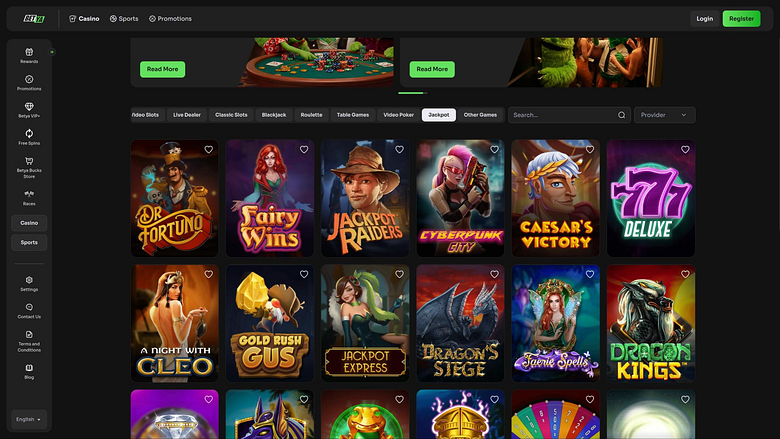
When a lobby contains thousands of games, browsing from the first screen is an inefficient approach. Begin with the broadest useful filter, such as Video Slots, Live Dealer, Blackjack or Jackpot, then narrow the selection using recency or popularity where available. A New section can help identify recent additions, while Favorites and Recents are more useful after you have already sampled a few suitable games.
Discovery labels also need careful interpretation. A Top 50 list may reflect current interest rather than objective quality, and a “hot” label does not mean a game is more likely to win. Likewise, a featured original is a category decision by the operator, not evidence that its mathematics are better. Treat these labels as navigation tools rather than recommendations about results.
A sensible shortlisting process can take only a few minutes:
- Choose one game family rather than browsing the full lobby.
- Remove titles whose rules or interface are unclear.
- Check the displayed paytable, stakes and available features.
- Use demo mode for eligible RNG games to learn the controls.
- Keep two or three candidates instead of opening dozens at once.
This approach reduces visual overload and makes it easier to compare games on information and comfort rather than presentation alone. Demo play can explain mechanics, but it cannot verify future results, volatility or personal profitability.
What should you compare inside similar games?
Two slots in the same category can offer very different experiences. Examine the paytable for winning combinations, bonus conditions, special symbols and any stated RTP information. RTP is a long-run theoretical figure, not a promise for one session. Volatility is also relevant: a game with less frequent but larger potential wins may feel very different from one with more frequent, smaller outcomes.
For table games, compare the rules rather than relying on the title alone. Blackjack versions may use different numbers of decks, dealer rules or side bets. Roulette can differ by wheel type, and baccarat may offer several additional wagers that are not necessary for the basic game. If a rule or side bet is unclear, skip it until the help panel explains how it works.
Live dealer games add presentation and social elements, including video streams, dealer chat and scheduled tables. These can make the format more engaging, but the stream does not change the underlying odds. Table limits, available seats and the pace of dealing may affect suitability. A quiet, lower-stake table may be more comfortable than a busy table with a faster rhythm, even when both use the same core game.
When is a demo useful—and when is it not?
Demo mode is most useful for learning a game’s interface without risking money. It can show where the paytable sits, how paylines or reels work, how to activate a feature and whether the mobile layout is readable. It is particularly helpful when a title includes cascading symbols, bonus rounds, multiple ways to win or unfamiliar controls.
Its limits are just as important. A short demonstration cannot establish whether a game is favourable, predict a bonus round or demonstrate a reliable pattern. Random outcomes in demo mode do not forecast real-money outcomes. Some titles may also have differences in available stakes or promotional eligibility, so the game’s real-money information should be checked separately before making a decision.
Use a demo as a screening step rather than a test of luck. Play long enough to understand the rules, then stop and decide whether the game remains suitable at the intended stake. If the interface feels confusing, the pace is uncomfortable or the features encourage spending more than planned, choosing another title is a practical response. Familiarity should improve clarity, not create pressure to continue.
How do mobile and live formats change discovery?
A responsive browser-based lobby can be useful on a phone or tablet because it avoids requiring a separate installation. However, small screens change how easily you can inspect paytables, rules and betting controls. Before choosing a game on mobile, rotate the device if needed, confirm that the help text is readable and avoid starting a fast format while distracted or using an unstable connection.
Live dealer content also benefits from a deliberate check before play. Video streams, dealer chat and game-show presentation can make the experience feel more immediate than a standard RNG title. That immediacy may be enjoyable, but it can also make decisions feel urgent. Review the table information first, note the stake range and avoid confusing entertainment value with better odds.
Game discovery works best when device and format support the same goal. Use a larger screen for comparing detailed rules or exploring a broad catalogue, and use mobile access for titles whose controls remain clear. Regardless of device, keep the search narrow: choose a category, review the rules, identify the stake, and move on if the game does not fit. This turns browsing into a considered choice rather than an invitation to keep scrolling.
Questions readers often ask about casino game discovery
Does a larger game library mean more winning opportunities?
No. A larger library provides more formats and themes, but it does not improve the mathematical outcome of an individual game. Compare rules, displayed RTP information, volatility and stake controls instead. Treat the number of titles as a convenience for discovery, not evidence of better odds or guaranteed results.
Can demo play show whether a slot is worth using?
Demo play can show how the controls, paytable and bonus features work. It cannot predict future results or prove that a game will be profitable. Use it to remove confusing or unsuitable titles, then review the real-money rules and choose only a stake that fits your limit.
Are live dealer games more transparent than RNG games?
Live dealer games show a streamed dealer and table, while RNG games generate outcomes electronically. The visual format does not automatically make either option more favourable. Read the rules and available limits for the specific title. Live presentation may improve engagement, but it does not remove normal gambling risk.